The 60% Tax Trap in 2026/27: A Complete Guide to Avoiding the UK's Secret Tax Band
Written by Joanna L., Finance Specialist · Reviewed by Nick B. · 12 min read
Published · Last updated
Key Insight
If you earn between £100,000 and £125,140, every additional £1 of income costs you roughly 60p in tax — more than the official Additional Rate of 45%. The most effective escape route is salary sacrifice into your pension, which can save you over £3,000 per year by restoring your full Personal Allowance.
Imagine negotiating a pay rise from £100,000 to £110,000 and ending up with less money in your pocket than before. That's not a hypothetical — it's exactly what happens to around 1.2 million UK workers earning between £100,000 and £125,140. At £110,000, your take-home pay is roughly £718 less than at £100,000, because the Personal Allowance taper creates a hidden 60% effective marginal rate. This guide explains exactly how the trap works, who it affects in 2026/27, and — most importantly — how to get out of it using pension contributions and salary sacrifice.
What Is the 60% Tax Trap?
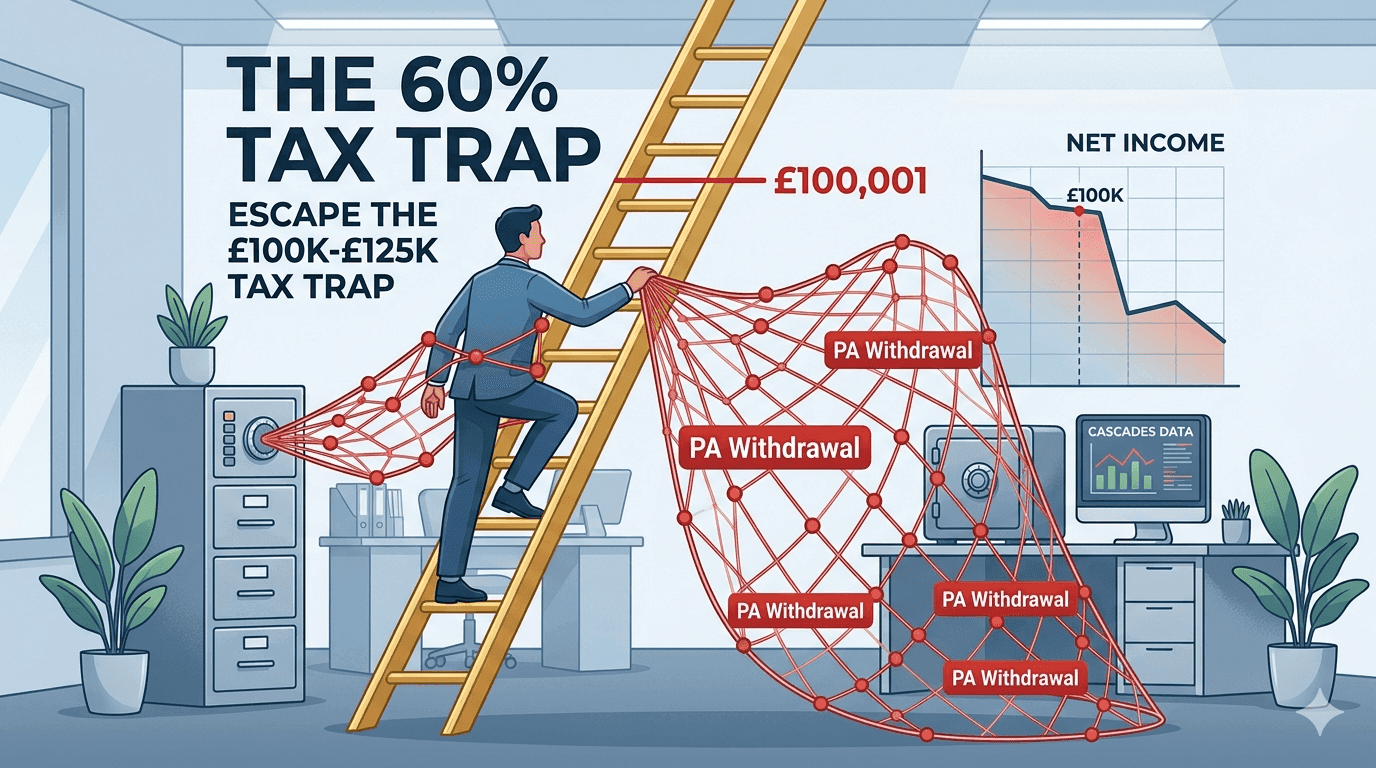
The 60% tax trap is the result of HMRC's rule that your Personal Allowance — the amount you can earn tax-free each year — is gradually withdrawn once your income exceeds £100,000. For every £2 you earn above this threshold, you lose £1 of your Personal Allowance.
Since the standard Personal Allowance for 2026/27 is £12,570, it is completely eliminated once your income reaches £125,140 (£100,000 + 2×£12,570).
While the official tax rate at this income level is 40% (the Higher Rate), the taper effectively adds a hidden 20% on top. Here's why: when you lose £1 of your Personal Allowance, that £1 becomes taxable at 40%. So for every extra £2 you earn, you pay 40% Income Tax on the £2 and you pay 40% Income Tax on the £1 of allowance you lost. That's 60p in total — an effective marginal rate of 60%.
The Trap in Numbers
- Income threshold: Starts at £100,000
- Taper rate: £1 of allowance lost per £2 earned
- Effective tax rate: 60% (40% Income Tax + 20% lost allowance)
- Full loss at: £125,140 (Personal Allowance = £0)
- Total tax cost: Up to £5,028 extra tax on the taper band
The Mechanics of the Trap: Breaking Down the Math
Let's walk through the calculations step by step to see exactly where the 60% rate comes from.
Suppose you earn £102,000 in the 2026/27 tax year. You are £2,000 above the £100,000 threshold. Under the Personal Allowance taper rule, you lose £1,000 of your allowance (£2,000 ÷ 2).
This means your Personal Allowance is now £11,570 instead of £12,570. That extra £1,000 of previously tax-free income is now taxed at 40%, costing you £400 in additional tax.
On top of that, you pay 40% Income Tax on the £2,000 you earned above £100,000, which is another £800. So in total, you pay £1,200 in tax on the extra £2,000 — exactly 60%.
Add National Insurance at 2% for earnings above the Upper Earnings Limit (and with recent employer National Insurance changes adding to the overall tax burden), and your total marginal rate in this band can reach 62%.
Why 2026/27 Is the Worst Year Yet for the Trap
The £100,000 threshold for the Personal Allowance taper has been frozen since 2010. Meanwhile, wages have risen due to inflation, promotions, and cost-of-living adjustments. This phenomenon — known as fiscal drag — means that record numbers of UK workers are now falling into the 60% tax trap for the first time.
According to HMRC data, the number of taxpayers earning over £100,000 has more than doubled in the past decade. In 2026/27, an estimated over 1 million UK workers will face the Personal Allowance taper — many of them unaware of its impact until they check their payslips. Understanding how PAYE calculates your monthly deductions is essential for spotting the trap early.
If you have recently received a promotion, bonus, or pay rise that pushes you over £100,000, understanding this trap and planning around it is essential.
A Practical Example: The £110,000 Salary Case Study
Let's take a real-world scenario. Sarah is a senior manager in London. Her salary was £100,000 in 2025/26, but she received a £10,000 pay rise for 2026/27, bringing her total to £110,000.
At first glance, Sarah expects her take-home pay to increase by around £6,000 after tax and National Insurance. But because the entire £10,000 falls within the 60% tax trap (since £110,000 is still below £125,140), the reality is very different.
| Component | Amount |
|---|---|
| Pay rise | £10,000 |
| Income Tax (60% effective rate) | -£6,000 |
| National Insurance (2%) | -£200 |
| Net increase in take-home pay | £3,800 |
Sarah's £10,000 pay rise results in only £3,800 extra in her bank account — a take-home rate of just 38%. She has lost 62% of her pay rise to tax and National Insurance.
If Sarah had known about the trap in advance, she could have used pension contributions or salary sacrifice to avoid it entirely. More on that below.
How to Legally Avoid the 60% Tax Trap
The good news is that the 60% tax trap is entirely avoidable — and the strategies to escape it are not only legal but actively encouraged by the government through tax relief. Here are the most effective methods:
1. Pension Contributions via Salary Sacrifice (The Best Way)
The single most effective way to avoid the 60% trap is to contribute to a workplace pension through salary sacrifice (also called salary exchange).
Salary sacrifice works by reducing your gross salary before tax is calculated (see how it works in detail). For tax purposes, HMRC looks at your Adjusted Net Income, which is your total income minus pension contributions and Gift Aid donations. If you reduce your Adjusted Net Income below £100,000, you retain your full Personal Allowance.
Let's return to Sarah's example. If she earns £110,000 and wants to avoid the trap, she could make a pension contribution of £10,000 via salary sacrifice. This brings her Adjusted Net Income back down to £100,000, restoring her full Personal Allowance and saving her £6,000 in Income Tax (60% of £10,000).
Pension Contribution Case Study
- Salary: £110,000
- Pension contribution (salary sacrifice): £10,000
- New Adjusted Net Income: £100,000
- Personal Allowance restored: Full £12,570
- Tax saved: £6,000 (60% of £10,000)
- NI saved: £200 (2% of £10,000)
- Total benefit: £6,200 + £10,000 now in pension
Crucially, the £10,000 is not lost — it is in Sarah's pension pot, growing tax-free until retirement. She has effectively converted a 60% marginal tax rate into 0% by deferring the income.
Check with your employer whether they offer salary sacrifice. Most modern workplace pensions support it. If yours does not, you can still make personal pension contributions and claim tax relief through your self-assessment tax return — see our detailed pension tax relief guide for a full breakdown of how this works.
2. Charitable Donations via Gift Aid
Charitable donations made under Gift Aid also reduce your Adjusted Net Income for the purposes of the Personal Allowance taper.
For every £1 you donate, the charity reclaims 25p from HMRC. As a higher rate or additional rate taxpayer, you can then claim back the difference between the higher rate (40% or 45%) and the basic rate (20%). Importantly, Gift Aid donations also extend your basic rate band, which helps claw back some of the tapered allowance.
If you regularly donate to charity, ensure you are claiming Gift Aid — it can reduce your tax bill and help you escape the trap.
3. Electric Car Salary Sacrifice and Other Schemes
Many employers now offer electric car salary sacrifice schemes. Under these arrangements, you lease an electric vehicle and the cost is deducted from your gross salary before tax. This reduces your Adjusted Net Income and, like pension contributions, can help you avoid the 60% trap.
Electric cars have extremely low Benefit-in-Kind (BiK) rates — just 2% in 2026/27 for zero-emission vehicles. This makes them exceptionally tax-efficient compared to petrol or diesel company cars.
Other salary sacrifice schemes that reduce Adjusted Net Income include:
- Cycle to Work schemes
- Childcare vouchers (legacy schemes only)
- Tech salary sacrifice (laptops, phones, etc.)
- Additional holiday purchase schemes
The High Income Child Benefit Charge Connection
If you have children and receive Child Benefit, the 60% trap is compounded by the High Income Child Benefit Charge (HICBC).
The HICBC claws back Child Benefit between £60,000 and £80,000 income (1% of benefit per £200 above £60,000). For parents also in the 60% trap, this creates a triple tax hit:
- 40% Income Tax on earnings above £100,000
- 20% effective tax from the Personal Allowance taper (totalling 60%)
- 2% National Insurance (plus the full loss of Child Benefit if applicable)
The good news? Pension contributions via salary sacrifice also reduce your income for HICBC purposes. A single £10,000 pension contribution could save you £6,000 in the 60% trap and restore thousands of pounds in Child Benefit. It is one of the most powerful tax planning moves available to UK parents.
Case Study: David, a Software Engineering Lead in London on £108,000
David is a 41-year-old software engineering lead at a fintech company in London. His base salary is £105,000, and he receives an annual performance bonus of £3,000, bringing his total gross income to £108,000. David has two children and claims Child Benefit.
At £108,000, David's Personal Allowance is reduced by £1 for every £2 above £100,000. His Adjusted Net Income of £108,000 exceeds the threshold by £8,000, so his allowance is cut by £4,000 — from the standard £12,570 down to £8,570. This means an extra £4,000 of his income is now taxable at 40%, costing him an additional £1,600 in Income Tax compared to someone earning just under £100,000. His effective marginal rate in this band is approximately 60%.
David consulted with his employer's HR team about increasing his pension contribution through salary sacrifice. By sacrificing an additional £8,000 into his pension (on top of his existing 5% contribution), David's Adjusted Net Income dropped to £100,000 — fully restoring his £12,570 Personal Allowance. The tax saving was substantial: £1,600 from restoring the allowance, plus £640 in employee NI saved (8% on the extra £8,000), totalling £2,240 in tax and NI savings for an £8,000 pension investment that only cost him £5,760 in reduced take-home pay.
David also avoided triggering the High Income Child Benefit Charge, which would have clawed back a portion of his £2,075 annual Child Benefit. By keeping his adjusted income at exactly £100,000, he preserved the full benefit — saving his family an additional £1,037 compared to the charge at £108,000. The combined annual saving from this single pension adjustment was over £3,277.
Conclusion: Take Control of Your Tax Planning
The 60% tax trap is one of the most punitive features of the UK tax system, but it is not inevitable. With proactive planning — especially through pension contributions and salary sacrifice — you can legally reduce your Adjusted Net Income, retain your Personal Allowance, and keep significantly more of your earnings.
If you earn over £100,000, or expect to in the near future, now is the time to review your tax position. Speak to your employer about salary sacrifice options, maximise your pension contributions, and consider Gift Aid if you donate to charity. The savings can be worth thousands of pounds per year — money that would otherwise go straight to HMRC.
Model your exact scenario with our take-home pay calculator. Enter your gross salary, adjust pension contributions, and watch in real time how much you reclaim by bringing your income below £100,000.
The Numbers Nobody Shows You: Comparing £99,000 vs £110,000 vs £130,000
To illustrate just how punishing the 60% trap is, consider three employees with identical circumstances (no children, no student loan, 5% salary sacrifice pension on qualifying earnings):
| Metric | £99,000 | £110,000 | £130,000 |
|---|---|---|---|
| Personal Allowance | £12,570 | £7,570 | £0 |
| Income Tax | £25,832 | £31,832 | £37,460 |
| Employee NI | £3,994 | £4,214 | £4,614 |
| Effective Tax Rate | 30.1% | 32.8% | 32.4% |
| Annual Take-Home | £67,044 | £71,524 | £84,246 |
| Take-Home per £1 extra gross | 58p | 38p | 53p |
The critical row is the last one. At £99,000, every extra pound earned nets you 58p. Jump to £110,000 — deep inside the trap — and each pound is worth just 38p. But at £130,000, once you have cleared the trap entirely, the marginal return recovers to 53p. This inversion is what makes the band between £100,000 and £125,140 uniquely damaging.
The counterintuitive reality: an employee earning £130,000 has a lower effective tax rate (32.4%) than one earning £110,000 (32.8%). The person earning £20,000 less is taxed more harshly on a percentage basis. This is the mathematical signature of the 60% trap, and it is why pension contributions in this band are the single most valuable tax planning tool available to UK employees.
The Personal Allowance taper thresholds, effective marginal rates, and pension relief figures in this article reflect HMRC's published rates for 2026/27. These thresholds are set annually by HM Treasury and may be revised in future Budgets. Salary sacrifice arrangements must be agreed with your employer and cannot be back-dated. If your Adjusted Net Income is close to the £100,000 boundary, obtain a personalised calculation from a Chartered Tax Adviser (CTA) or Chartered Accountant before committing to any arrangement.
Authoritative Sources & Further Reading
- GOV.UK: Income Tax rates and Personal Allowances — confirms the £100,000–£125,140 taper and Higher Rate band for 2026/27
- HMRC: Income Tax rates and allowances — current and past — historical context showing how the Personal Allowance taper has applied since 2010
- GOV.UK: National Insurance — how much employees pay — the 2% NI rate above £50,270 that contributes to the 62% marginal rate
- GOV.UK: Individual Savings Accounts (ISAs) — an alternative to pensions for sheltering income from the £100k taper