Loading...
Updated for the 2026/27 Tax Year
UK Salary & Take-Home
Pay Calculator
This calculator is designed for UK employees, contractors, and freelancers who want to understand exactly how much of their salary they take home after tax.
Every UK payslip deducts Income Tax, National Insurance, pension contributions, and sometimes student loan repayments before your salary reaches your bank account. The exact amounts depend on your tax code, earnings bracket, and personal circumstances — and getting them wrong can cost you hundreds of pounds a year.
Our free calculator uses the confirmed 2026/27 HMRC rates and thresholds to give you a personalised breakdown in seconds — covering Scottish and English tax bands, salary sacrifice pensions, and Child Benefit clawback.
🔒Your data stays in your browser
✔HMRC-verified rates
£12,570
Personal Allowance
20%
Basic Rate
£50,270
Higher Rate Threshold
8%
Employee NI Rate
How UK Income Tax Works in 2026/27
One of the most common mistakes we see is people thinking that crossing into the Higher Rate means their entire salary is taxed at 40%. In reality, the UK uses a progressive system — only the portion above each threshold is taxed at the higher rate. On a £55,000 salary, just £4,730 is taxed at 40%; the rest stays at 20% or 0%. This single misunderstanding leads many workers to turn down pay rises or avoid crossing tax bands unnecessarily.
Income Tax Bands
England, Wales & Northern Ireland
- Personal Allowance £0–£12,5700%
- Basic Rate £12,571–£50,27020%
- Higher Rate £50,271–£125,14040%
- Additional Rate Over £125,14045%
On a £35,000 salary, you only pay 20% on the £22,430 above your Personal Allowance — not on the full £35,000.
Scotland (Six Bands)
- Starter £12,571–£16,53719%
- Basic £16,538–£29,52620%
- Intermediate £29,527–£43,66221%
- Higher £43,663–£75,00042%
- Advanced £75,001–£125,14045%
- Top Over £125,14048%
Scottish taxpayers pay six rates instead of three. At £35,000, a Scottish worker pays roughly £200 more per year than an English worker on the same salary. Full comparison →
National Insurance Contributions
Employee NI — All UK Regions
Unlike Income Tax, National Insurance rates are the same across England, Scotland, Wales, and Northern Ireland. NI is calculated separately from tax and funds the State Pension, NHS, and other benefits.
- Below threshold Up to £12,5700%
- Main rate £12,570–£50,2708%
- Upper rate Above £50,2702%
Combined with 20% Basic Rate tax, a typical employee loses roughly 28% of every pound earned above £12,570. Higher Rate taxpayers face a combined 42% marginal rate (40% tax + 2% NI) above £50,270.
How Tax Affects Real UK Workers in 2026/27
Every salary level hits different tax brackets. Here's how three common situations play out after all deductions:
Basic Rate Taxpayer
James — £32,000 Salary
- Income Tax: £3,886
- Employee NI: £1,554
- Pension (5% sacrifice): £1,288
- Take-Home: ~£25,272/yr · £2,106/mo
James pays 20% tax on everything above £12,570. His salary sacrifice pension saves him £258 in NI compared to relief at source.
Higher Rate Taxpayer
Nick — £55,000 + Plan 2 Loan
- Income Tax: £8,432
- Employee NI: £3,111
- Student Loan: £2,493
- Pension (5% sacrifice): £2,438
- Take-Home: ~£38,526/yr · £3,211/mo
Nick crosses into the 40% band. His Plan 2 student loan repays 9% of earnings above the £29,385 threshold. Increasing his pension to 8% would pull him below the Higher Rate threshold.
60% Tax Trap
Mike — £110,000 + 2 Children
- Income Tax: £31,432
- Employee NI: £4,214
- HICBC Clawback: £1,127
- Pension (5% sacrifice): £5,225
- Take-Home: ~£68,002/yr · £5,667/mo
Mike loses £5,000 of Personal Allowance due to the 60% tax trap. A £10,000 salary sacrifice pension would restore his full allowance and save ~£6,000 in tax.
Figures are estimates using default 2026/27 HMRC rates with salary sacrifice pensions on qualifying earnings. Run your own numbers for a personalised breakdown.
Tax & Salary Guides
In-depth, HMRC-sourced guides to help you understand your pay, plan your finances, and keep more of what you earn.
Tax Codes
Understanding Your UK Tax Code
What 1257L, BR, D0, and K codes mean — and how to check your payslip is correct for the 2026/27 tax year.
Read guide →
Tax Planning
The 60% Tax Trap Explained
Earning over £100k? How the Personal Allowance taper creates a hidden 60% rate — and proven strategies to avoid it.
Read guide →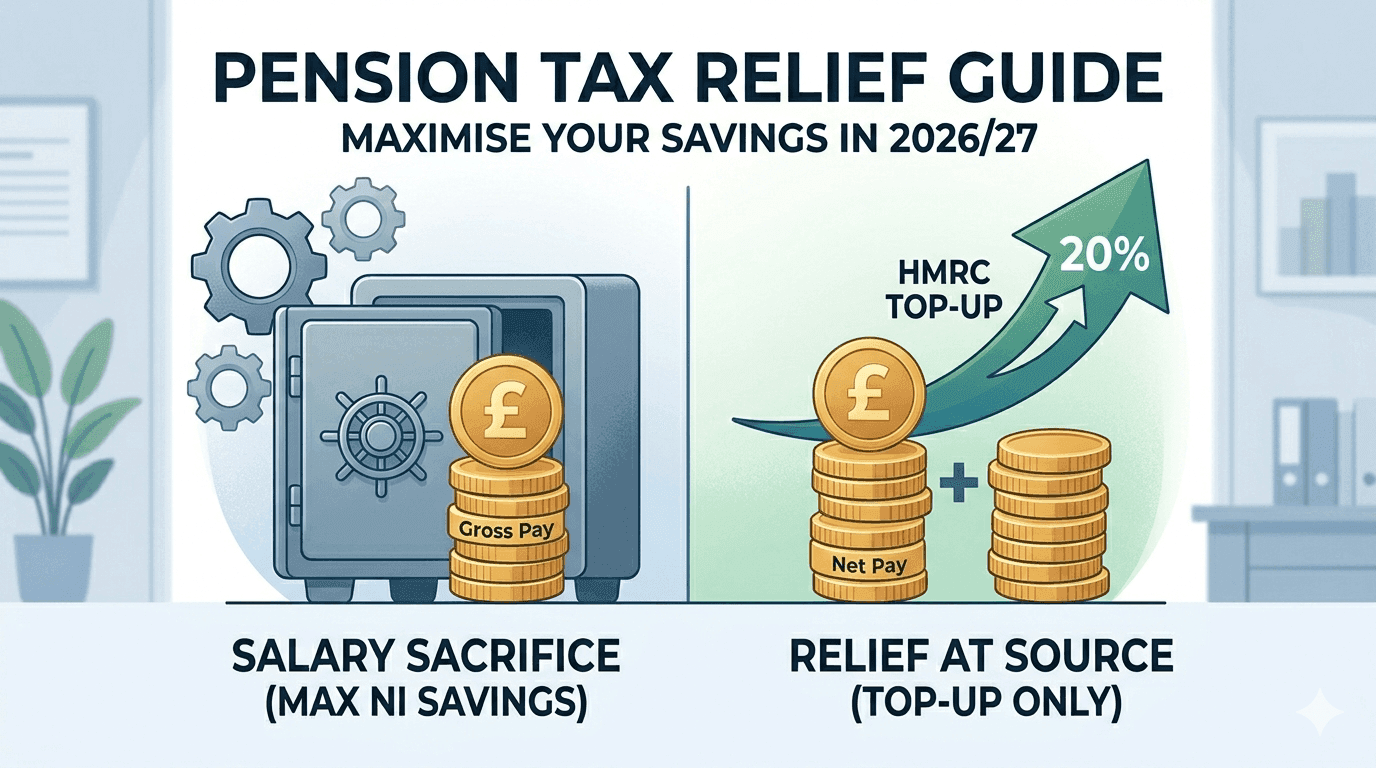
Pensions
Pension Tax Relief Guide
Salary sacrifice, relief at source, the £60k Annual Allowance, and how Higher Rate taxpayers can reclaim unclaimed relief.
Read guide →
Regional Tax
Scottish vs English Tax Compared
Side-by-side comparison of Scotland's six Income Tax bands vs England's three, with worked examples at key salary levels.
Read guide →
Student Loans
Student Loan Repayment Guide
Plans 1–5 thresholds, monthly repayment examples, write-off dates, and whether voluntary overpayments make sense.
Read guide →
Family Benefits
Child Benefit & HICBC Guide
How the High Income Child Benefit Charge works from £60k, worked examples, and pension strategies to keep your benefit.
Read guide →📖
New to tax jargon? Browse our Tax Glossary
❓
Have a tax question? Read our FAQ
🏠
Buying a home? Mortgage Affordability Calculator
Why We Built This (And What Makes It Different)
Most UK salary calculators give you a single number with no breakdown of how they got there. We built ours to show every step — the Personal Allowance taper between £100k and £125,140, NI on salary sacrifice savings, student loan interactions with pension contributions — because a figure you can't verify isn't a figure you can trust.
Every figure on this site comes from a calculation engine built from first principles using HMRC's employer guidance — not ported from another tool. We test against 50+ real UK payslips each tax year, covering Scottish taxpayers, student loan dual-plans, Marriage Allowance, HICBC, and the 60% trap simultaneously. When HMRC confirmed the 2026/27 rates in December 2025, we updated every threshold within hours and re-verified all edge cases.
Our articles aren't rewrites of HMRC pages. Each one documents what we found when testing specific scenarios — the errors people actually make, the savings that genuinely work, and the misconceptions we encounter in user feedback every week. Everything is reviewed by Joanna (MSc Finance, accounting background) for technical accuracy before publication.
Sources: HMRC Income Tax rates · NI rates and thresholds · Student loan repayment thresholds
No salary data shared with third parties
Updated for 2026/27
HMRC-sourced rates